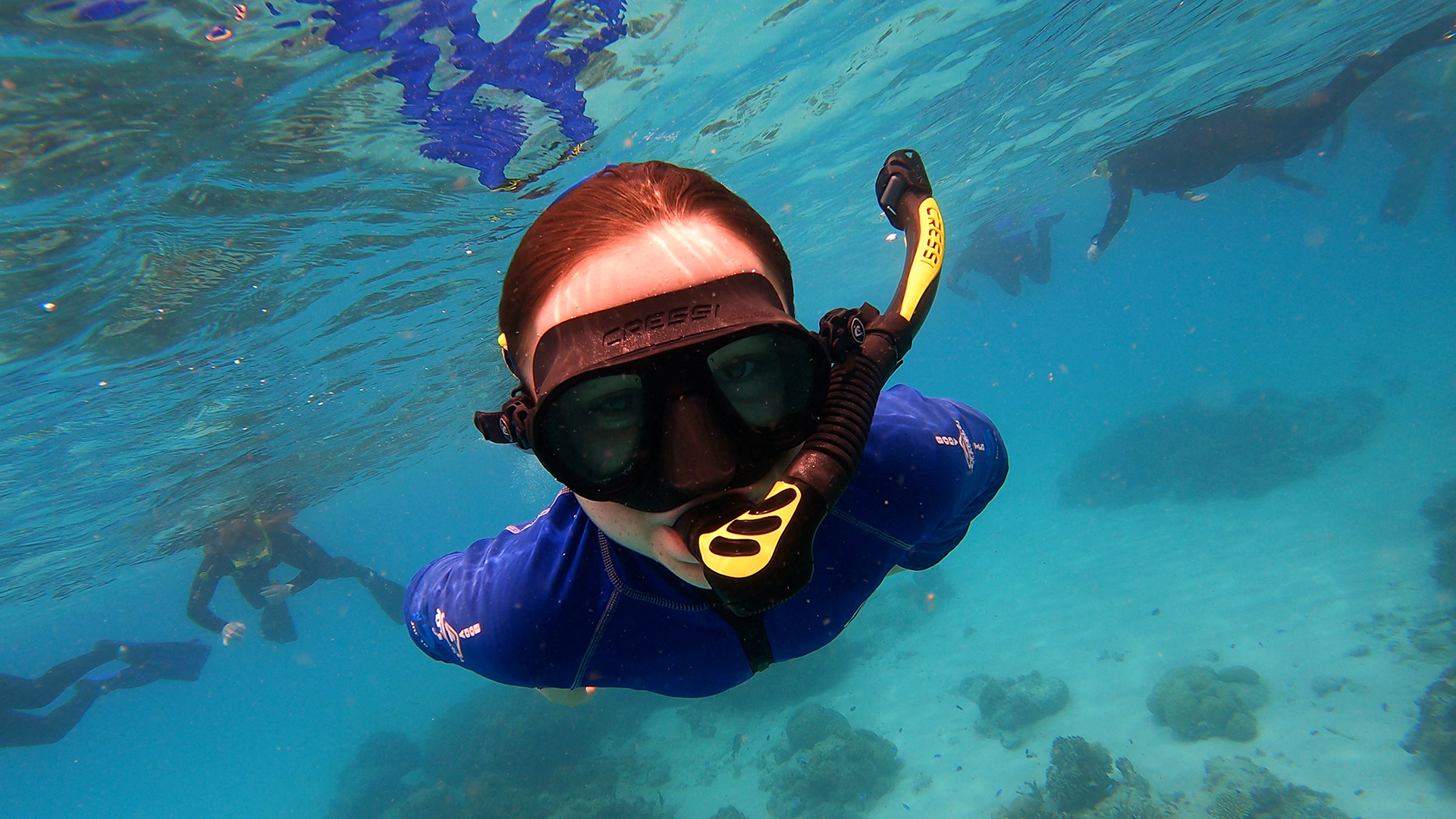
Box jellyfish, particularly Chironex fleckeri, are a natural presence in the waters around Cairns during the warmer months of November to May, a period known as ‘stinger season.’ While these jellyfish are most commonly found inshore, closer to beaches and tidal streams, they are less frequently encountered on the reef, which lies 20–60 km offshore.
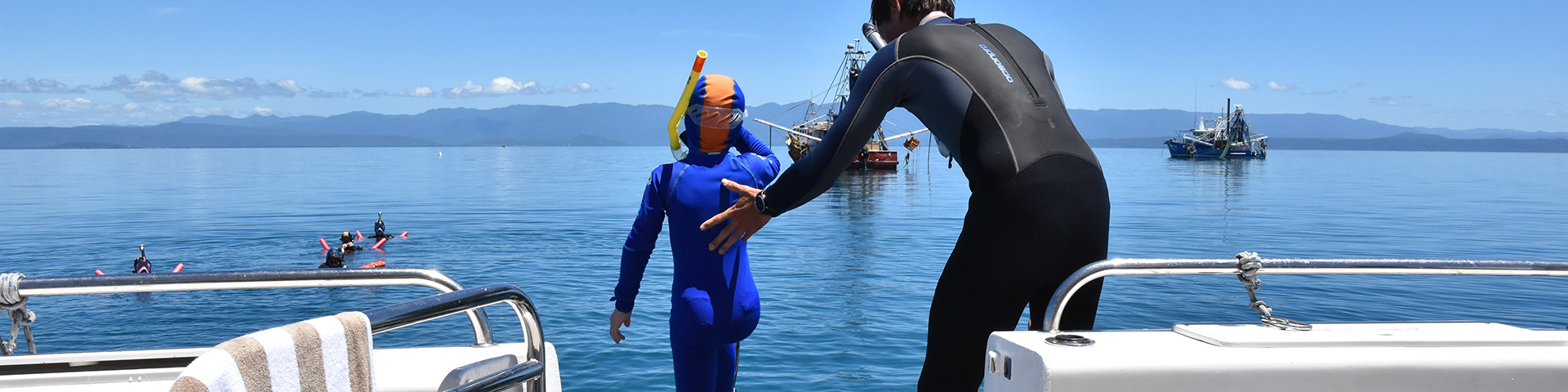
Reef tour operators prioritise guest safety by providing stinger suits to all participants during this time. These suits serve a dual purpose: they protect against potential jellyfish stings and also offer excellent sun protection during extended periods in the water. With these precautions in place, along with other safety measures, visitors can enjoy their Great Barrier Reef experience with confidence, even during stinger season.
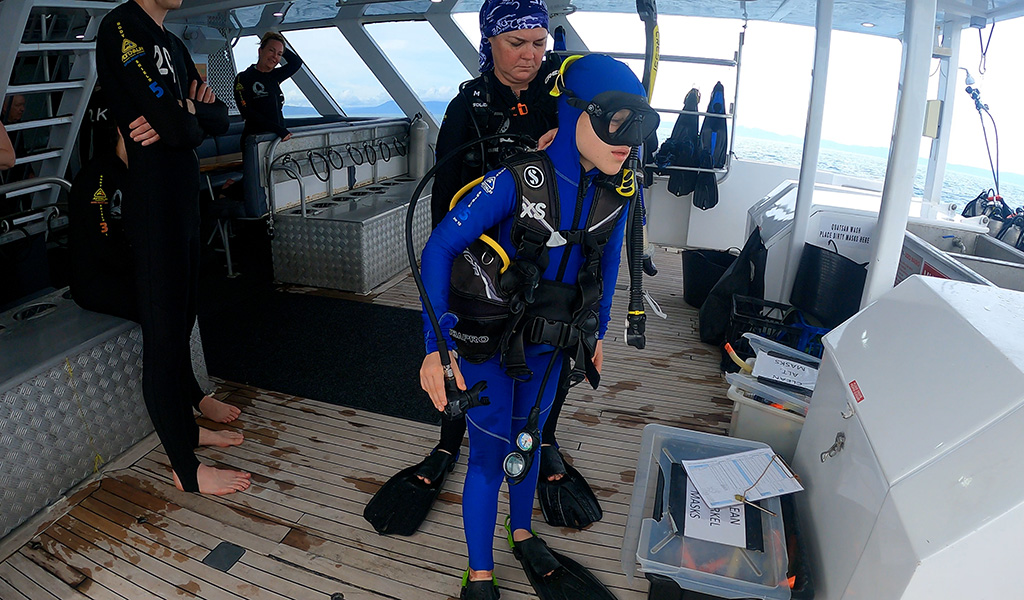
Stay safe, wear stinger suits during stinger season on the Great Barrier Reef.
Box jellyfish, known scientifically as Chironex fleckeri, are a highly venomous marine species native to tropical Australian waters. They are most prevalent during the warmer months of November to May and are usually found closer to shore in tidal streams and beaches. These jellyfish thrive in warm waters, which is why they are more common during Cairns’ summer season.
Box jellyfish are named for their cube-shaped bell, and their tentacles can reach up to 3 metres in length. They are surprisingly agile swimmers, moving at speeds of up to 5 km/h. Their tentacles contain nematocysts, which are stinging cells that release venom upon contact. This venom can cause severe pain, cardiac complications, and, in rare cases, death if not treated promptly.
‘Box jellyfish have been described as ‘the world’s most venomous creature’.
While box jellyfish are less common on the offshore reef than inshore, precautions are still vital. Tour operators ensure that snorkellers and divers are informed and equipped to safely enjoy the Great Barrier Reef, even during stinger season.
The presence of box jellyfish during stinger season has led Cairns reef tour operators to implement robust safety measures. These efforts ensure that visitors can enjoy snorkelling and diving on the reef with minimal risk.
Stinger suits are provided to all participants during stinger season. Made of lightweight Lycra, these suits cover most of the body, including the arms and legs, and some designs include hoods for additional protection. Stinger suits minimise the risk of stings by covering exposed skin and are highly recommended for all water activities. As an added bonus, they also provide protection from harmful UV rays, which is essential in the tropical sun.
All tour operators include detailed safety briefings before reaching the reef. These briefings educate guests about the potential risks, how to wear stinger suits properly, and what to do in the unlikely event of a sting. Operators also carry first aid supplies, including vinegar, which neutralises jellyfish venom.
While this article focuses on box jellyfish, visitors should be aware that other jellyfish species, such as Irukandji jellyfish, are also present in Cairns waters. Irukandji are much smaller and require different safety considerations, which will be covered in a dedicated article. Box jellyfish and Irukandji are not the same species, and their risks and behaviours differ significantly.
By following safety measures and relying on the preparedness of tour operators, visitors can confidently enjoy their reef experience, even during stinger season.
About these products, we are not a direct booking agent but have a partnership with Viator to allow us to make a small commision from any bookings you make from our site, this keeps the engine going and fuels our drive to create the best independant diving and snorkeling advice.
Stinger season typically runs from November to May, coinciding with the warmer months when jellyfish are most active in tropical waters.
Box jellyfish are less common on the reef compared to inshore waters, but tour operators take precautions to ensure visitor safety.
Tour operators provide stinger suits, conduct safety briefings, and carry first aid supplies like vinegar to treat stings if necessary.
Yes, stinger suits protect against most jellyfish stings by covering exposed skin and are also excellent for sun protection.
If stung by a jellyfish, alert the crew immediately. They are trained to handle such situations and will administer the correct first aid, including applying vinegar to the affected area to neutralise the stinging cells. Follow their instructions closely and seek further medical attention if advised.
Yes, but be aware that some jellyfish, including box jellyfish, may be attracted to light. Always follow operator instructions.
Absolutely. By wearing stinger suits and following safety guidelines, visitors can enjoy snorkelling and diving safely year-round.
Jellyfish, particularly box jellyfish, are a natural part of Cairns’ marine environment. While these species demand awareness and respect, proper precautions such as wearing stinger suits, attending safety briefings, and using first aid when necessary ensure a safe and enjoyable experience. By following these tips and relying on the expertise of Cairns’ tour operators, you can confidently enjoy the Great Barrier Reef, even during stinger season.

© Cairns Dive Guide 2026